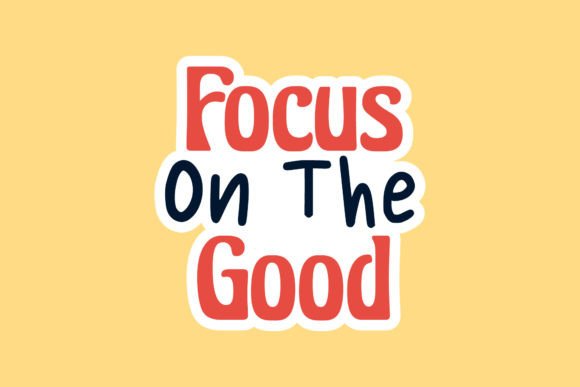
Back to School Sticker Focus on the Good: A Thoughtful Design Tool for Positive Transitions
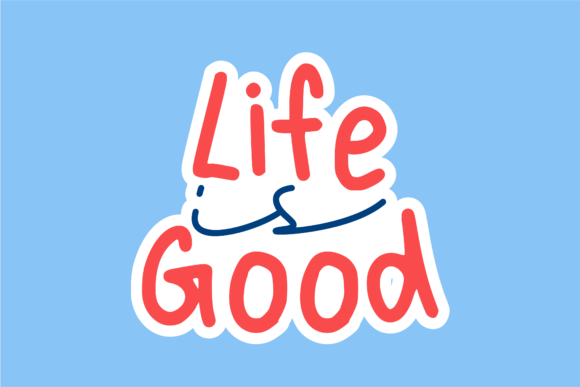
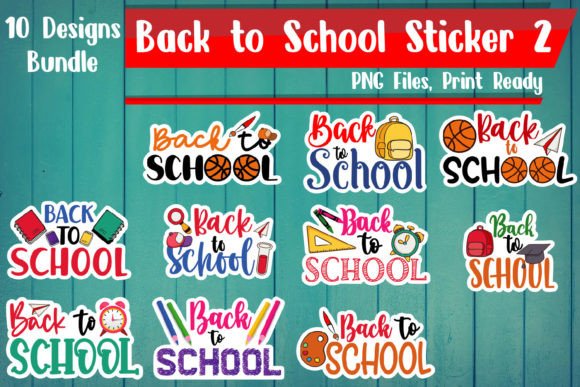
Every August, classrooms, hallways, and backpacks begin to hum with quiet anticipation. The shift from summer’s open-ended rhythm to the structured cadence of the academic year carries emotional weight—not just for students, but for educators, parents, administrators, and creative professionals alike. In this context, a simple visual cue—like a Back to School Sticker Focus on the Good—can serve as more than decoration. It becomes a deliberate, scalable expression of mindset, intention, and shared values.
Why “Focus on the Good” Resonates Beyond the Classroom
The phrase “focus on the good” is not about ignoring challenges—it’s about anchoring attention where agency and growth reside. Psychologically, this aligns with evidence-based practices like gratitude journaling, strengths-based education, and positive behavioral interventions. When embedded in tangible, reusable design assets—such as a Back to School Sticker Focus on the Good—the concept gains accessibility. It moves from abstract principle to practical tool.
Consider how different users apply this idea:
- Educators print the sticker to place on lesson plan binders, classroom doors, or student feedback forms—reinforcing a climate where effort, curiosity, and kindness are named and honored.
- School counselors and SEL coordinators integrate it into handouts, digital newsletters, or interactive bulletin boards that invite reflection: “What’s one thing going well for you this week?”
- Parents and caregivers use it on lunchbox notes, homework folders, or family calendars—not as pressure to be cheerful, but as gentle permission to notice small wins amid transitions.
- Small business owners and stationery designers incorporate the motif into custom planner inserts, teacher appreciation kits, or back-to-school subscription boxes—offering customers both aesthetic cohesion and emotional resonance.
Design Integrity Meets Functional Flexibility
The value of a Back to School Sticker Focus on the Good lies not only in its message but in how thoughtfully it’s engineered for real-world use. Unlike generic clipart or low-resolution downloads, this asset delivers six distinct digital files—all built on a consistent 1920px × 1280px canvas size. That uniformity matters: it ensures visual harmony whether scaling for a laptop wallpaper or adapting for vinyl cutting.
Each format serves a distinct purpose:
- AI (Adobe Illustrator) and EPS files preserve vector scalability—ideal for professional print shops, large-format signage, or brand-aligned rebranding projects.
- SVG supports responsive web use: embed directly into learning management systems (LMS), school websites, or digital behavior charts without pixelation.
- DXF enables precision cutting on machines like Cricut or Silhouette—making it viable for craft-based educators, PTA volunteers, or makerspace facilitators who produce physical stickers, badges, or laminated affirmations.
- JPG offers broad compatibility for quick email attachments, slide decks, or social media posts—no special software required.
- PNG includes transparent background support, allowing seamless layering over photos, worksheets, or virtual backgrounds during video calls.
This multi-format approach reflects an understanding of diverse technical fluency levels. A first-year teacher may start with the PNG for a Google Slides welcome slide; a graphic designer building a district-wide wellness campaign might refine the AI file to match institutional color palettes and typography guidelines.
Practical Integration Across Learning Environments
In hybrid and remote settings, digital assets carry heightened relevance. A Back to School Sticker Focus on the Good can appear as a subtle watermark on Zoom virtual backgrounds, a recurring icon in weekly check-in forms, or a celebratory badge awarded in gamified learning platforms. Its strength is adaptability—not prescriptiveness.
For example, one middle school science department used the sticker as part of a “Science Mindset Tracker.” Students placed a printed version on their lab notebooks each time they demonstrated resilience—like revising a failed hypothesis or offering constructive peer feedback. Over time, the accumulation became visible evidence of growth, shifting focus from grades alone to process-oriented development.
Similarly, a rural high school counseling team embedded the SVG version into a self-paced digital module on transition stress. Learners clicked interactive hotspots tied to the sticker’s elements—“What’s one strength you’re bringing into this year?” or “Who’s someone you can ask for help?”—transforming passive viewing into active reflection.
Thoughtful Customization Without Compromising Core Intent
The included editable files empower customization while safeguarding the sticker’s foundational ethos. Users can adjust colors to reflect school spirit (navy and gold), neurodiversity awareness (blue and silver), or seasonal themes (crisp autumn amber)—but the central phrase remains intact. This balance prevents dilution: the message stays legible, warm, and grounded.
It’s worth noting what this design intentionally avoids. There are no cartoonish grins, no exaggerated exclamation points, no language implying perfection (“You’ll ace everything!”). Instead, the typography is clean and approachable; the layout centers clarity over clutter. That restraint makes the sticker equally appropriate for a trauma-informed preschool setting and a graduate-level educator workshop on restorative practices.
Broader Implications for Educational Culture
Stickers seem minor—yet cultural shifts often begin with repeated, accessible symbols. When “focus on the good” appears consistently across grade levels, departments, and communication channels, it signals alignment. It tells students: your well-being is part of the curriculum. It tells staff: your emotional labor is seen. It tells families: we’re partnering in holistic development—not just academic outcomes.
Research from the Collaborative for Academic, Social, and Emotional Learning (CASEL) underscores that schools embedding positive psychology principles across systems—not just in isolated lessons—report stronger attendance, improved peer relationships, and increased teacher retention. A Back to School Sticker Focus on the Good functions as one small, replicable node within that larger ecosystem.
Accessibility and Ethical Considerations
Real-world usability extends to inclusivity. The high-resolution canvas size (1920×1280px) accommodates screen magnification tools without loss of legibility. The contrast ratio between text and background meets WCAG 2.1 AA standards when rendered at full size. For users adding translations or adaptations—say, Spanish-speaking families or bilingual classrooms—the vector formats allow clean text replacement without distortion.
Equally important is contextual awareness. Using this sticker shouldn’t override space for naming difficulty. Paired effectively, it coexists with resources for anxiety support, academic accommodations, or mental health referrals. Its role is additive—not corrective. It doesn’t say “ignore the hard parts”; it says “here’s where we choose to direct our energy today.”
From Individual Use to Collective Practice
A single download can spark ripple effects. A homeschool parent prints fifty copies to share with co-op families. A university education program distributes the SVG to student teachers as part of a classroom management toolkit. A nonprofit supporting refugee youth adapts the DXF file to create tactile stickers with braille labels—extending reach across sensory and linguistic modalities.
That scalability rests on intentionality built into the file structure. Having both AI and EPS ensures compatibility across older and newer design ecosystems. Including JPG and PNG removes barriers for non-designers—teachers managing five preps, PTA members coordinating spirit week, or after-school program directors updating flyers on tight deadlines.
Looking Ahead: Sustainability and Evolution
As educational priorities evolve—toward greater emphasis on social-emotional learning, culturally responsive pedagogy, and digital citizenship—the function of tools like the Back to School Sticker Focus on the Good also expands. Future iterations might include multilingual variants, AR-enabled versions for interactive learning experiences, or integration with data dashboards that visualize collective “good focus” moments across a school year.
But its enduring utility lies in simplicity. It doesn’t require training manuals or subscriptions. It asks little of the user—and offers much: consistency, warmth, flexibility, and quiet affirmation that the work of returning, reconnecting, and rebuilding is itself worthy of recognition.
Whether applied to a notebook cover, embedded in a digital rubric, or cut into a magnet for a teacher’s fridge, this sticker holds space—not for unrealistic optimism, but for grounded hope. And in the complex, demanding work of education, that distinction makes all the difference.