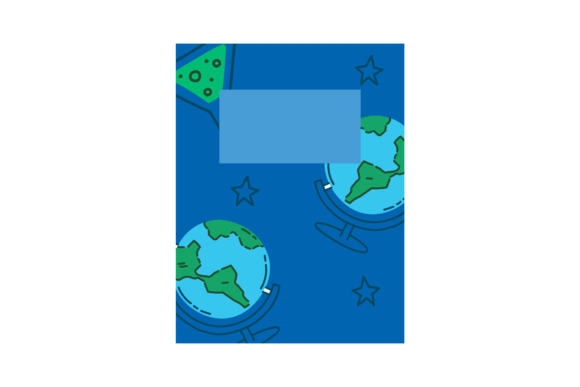
Back to School Blue Earth Books Cover
If you're designing classroom materials, launching an eco-conscious education brand, or preparing digital resources for the new academic year, the Back to School Blue Earth Books Cover is more than just a visual—it’s a ready-to-deploy foundation that saves time, reinforces values, and looks polished across platforms.
This isn’t a generic template you’ll see on ten other sites. It’s intentionally designed with educators and sustainability-minded creators in mind: a clean, calm blue palette evoking sky and ocean, layered with subtle earth textures and thoughtful typography. The “blue earth” motif signals care for learning *and* the planet—something parents, teachers, and school administrators increasingly look for when evaluating curriculum support tools or branded educational content.
Where You’ll Actually Use This Cover—Not Just Save It
You might download it thinking, “I’ll use it for a workbook.” And yes—you absolutely can. But its real value shows up in less obvious moments:
- A homeschool parent building a custom summer-to-fall transition packet for their two kids—printing the cover on cardstock, binding it with a coil, and adding handwritten notes inside. The 1920px × 1280px canvas fits perfectly on standard letter-sized layouts (with room to crop or bleed as needed).
- A small publishing startup releasing a series of STEM activity books for grades 3–6. They drop the Back to School Blue Earth Books Cover into Canva, swap out the title text, and export a print-ready PDF—all before lunch. No designer on retainer required.
- A university extension program creating free downloadable lesson plans for K–12 science teachers. They use the PNG version as a thumbnail on their resource hub, the JPG for email headers, and the AI file to adjust color contrast for accessibility compliance.
- A freelance graphic designer pitching a rebrand to a Montessori school network. Instead of starting from scratch, they adapt the EPS version—changing fonts and rearranging layout elements—to show clients how their existing visual language could evolve.
It works because it’s built for flexibility—not just aesthetics. That blue isn’t oversaturated, so it prints cleanly on both home inkjets and commercial offset presses. The earth texture is low-contrast and non-distracting, meaning student-facing worksheets or digital slides won’t suffer from visual clutter. And because it’s centered around a book cover format—not a social media post or flyer—it respects the hierarchy and breathing room readers expect from educational material.
Why Format Variety Matters (More Than You Think)
The fact that you get six formats total—AI, EPS, DXF, JPG, PNG, and one more JPG or PNG (depending on delivery)—isn’t about checking boxes. It’s about matching the right tool to your actual workflow:
- AI (Adobe Illustrator): For deep customization—changing individual vector shapes, adjusting gradients, or isolating the earth icon to use elsewhere in your branding system.
- EPS: When you need compatibility with older design software or print vendors who still require legacy vector formats.
- DXF: Useful if you’re laser-cutting covers for handmade journals, engraving notebooks for a teacher appreciation gift set, or prepping files for vinyl cutting machines in a school makerspace.
- JPG & PNG: For quick uploads—Google Classroom banners, LMS homepage graphics, blog headers, or even printed handouts where full vector editing isn’t necessary.
You don’t need all six at once—but having them means you won’t hit a wall six months later when your needs change. That educator who started with the PNG for a simple Google Doc cover? She might later want to embroider the earth icon onto tote bags for her students. The DXF file makes that possible. The entrepreneur who used the JPG for her Etsy listing may later hire a designer who only accepts AI or EPS. She’s already covered.
Real Things to Consider Before You Use It
Before dropping this into your next project, ask yourself a few practical questions:
- Who’s seeing it—and where? If it’s going straight into a printed student workbook, double-check that your printer supports the color profile (sRGB is safe for most). If it’s for a website banner, the PNG with transparent background gives you more layout freedom than JPG.
- Do you need to localize or translate the title? The AI and EPS files let you edit text natively—no pixel-pushing in Photoshop. But if you’re adding languages with special characters (e.g., Spanish accents, Vietnamese diacritics), test font embedding early.
- Is accessibility part of your goal? The blue-on-light background meets basic contrast ratios for body text, but if you’re overlaying additional text, run a quick check with WebAIM’s Contrast Checker. Small tweaks—like darkening the blue slightly or adding a soft drop shadow—can make a real difference for dyslexic learners or those with low vision.
- What’s your distribution plan? Selling physical copies? You’ll likely use the AI or EPS for print prep. Offering digital downloads? The JPG and PNG are optimized for fast loading and clear display on tablets and phones.
None of these require technical expertise—just a few minutes of planning. And because the canvas size (1920px × 1280px) is proportionally close to common print ratios like 8.5" × 11", resizing rarely means sacrificing detail or balance.
Who Benefits Most—and How It Fits Into Their Day
Freelancers appreciate not reinventing the wheel before a client call. Educators love having something trustworthy and classroom-appropriate without scrolling through dozens of overly playful or cartoonish options. Bloggers covering back-to-school prep use it to visually anchor roundups—“Here’s what worked for me last year” feels more credible when paired with a cohesive, professional-looking cover.
Small business owners selling printable planners or subject-specific study guides find it speeds up product launches. One customer told us she used the DXF file to cut matching covers for a batch of recycled-paper notebooks she sells at local teacher fairs—and kept the AI file on hand to tweak colors for seasonal variations (e.g., swapping blue for warm amber in fall-themed versions).
Even hobbyists benefit: a grandparent making a personalized “First Grade Memory Book” for their granddaughter didn’t need advanced skills—just the PNG, a free photo editor, and five minutes to add her name and start date.
The Back to School Blue Earth Books Cover doesn’t promise to solve every design challenge. But it does remove friction at the very beginning—when you’re tired, pressed for time, and just need something grounded, usable, and quietly meaningful. That’s where real momentum starts.