Welcome Back to School Sublimation Design: A Practical Guide for Creators and Educators
As summer winds down and classrooms begin to hum with renewed energy, a quiet but powerful creative shift takes place across homes, schools, small businesses, and craft studios: the surge in demand for Welcome Back to School Sublimation Desig assets. These aren’t just seasonal graphics—they’re versatile digital tools that bridge education, personal expression, and small-scale manufacturing. Whether you're a teacher printing custom mugs for student welcome kits, a parent crafting personalized tumblers for the first day of class, or an entrepreneur launching a back-to-school merchandise line, high-quality sublimation-ready designs serve as foundational elements in your workflow.
What Makes a Sublimation Design Truly Functional?
A Welcome Back to School Sublimation Desig isn’t interchangeable with any generic school-themed PNG. Its functionality hinges on precise technical execution. Each design in this category is delivered as a single PNG file—2500×2500 pixels at 300 dpi—with a fully transparent background. This resolution ensures crisp output across multiple substrates: from compact 11 oz ceramic mugs to oversized tote bags and stainless steel tumblers. The transparency eliminates manual clipping or masking during print preparation, saving time and reducing errors in both home-based and commercial production environments.
Unlike vector files that scale infinitely, these raster-based PNGs are optimized for sublimation’s unique heat-transfer process. Sublimation ink converts from solid to gas under high temperature and pressure, embedding directly into polyester-coated or polymer-infused materials. That means the design must be sharp at its native size, with clean edges and no anti-aliasing artifacts that could blur or feather during transfer. The 300 dpi standard aligns with industry best practices for sublimation printers—ensuring fidelity whether you’re using a Sawgrass Virtuoso, Epson F-Series, or entry-level Cricut EasyPress system paired with compatible sublimation paper.
Real-World Applications Across Diverse User Groups
The versatility of these designs emerges most clearly when viewed through the lens of actual use cases—not hypothetical ones.
Educators and School Staff
Teachers often seek ways to foster belonging before the first bell rings. A Welcome Back to School Sublimation Desig can become part of a coordinated classroom launch: printed onto reusable water bottles handed out during orientation, applied to laminated name tags for desks, or transferred onto fabric banners that hang in hallways. Because each file includes transparency, educators can layer text—like individual student names or grade levels—using basic graphic software before printing. No need for expensive design subscriptions; free tools like Photopea or Canva handle layering seamlessly.
Crafters and Small-Business Owners
For makers selling at local markets or online via Etsy or Shopify, consistency and speed matter. A set of coordinated Welcome Back to School Sublimation Desig files allows rapid prototyping across product types. One design might appear on a mug in the morning, then get resized for a 4×6 sticker sheet by afternoon—without loss of clarity. Because all files share the same aspect ratio and resolution, batch processing becomes efficient. You can import them into Silhouette Studio or Cricut Design Space, apply mirror-flip settings automatically, and send them straight to your printer. There’s no reworking of layers or color profiles between formats.
After-School Program Coordinators and Youth Organizations
Groups running summer bridge programs or STEM camps frequently rely on branded gear to reinforce identity and continuity. A sublimation design featuring inclusive imagery—diverse students, accessible learning tools, or subtle academic motifs—can be applied to lanyards, wristbands, and drawstring backpacks. Since the files are digital-only, coordinators can distribute them securely to volunteer designers or partner print shops without shipping delays or inventory overhead.
Why Transparency and Resolution Matter More Than Style Alone
It’s easy to focus solely on aesthetics—fonts, colors, iconography—but in practice, two technical attributes determine whether a Welcome Back to School Sublimation Desig delivers real value: transparency and pixel density.
A transparent background isn’t merely convenient—it’s essential for professional results. Consider a tumbler with a matte white base versus one with a rose-gold finish. With transparency, the same design adapts naturally to either surface. Without it, white pixels would obscure the underlying material, creating unsightly halos or mismatched tones. Likewise, the 2500×2500 px dimension supports flexibility: scaling down preserves detail for small items (like keychains), while upscaling remains viable within safe limits for larger surfaces (such as 12×16 inch coasters) when using bicubic interpolation in editing software.
This attention to technical integrity also benefits accessibility. Designers working with students who have visual processing differences can adjust contrast, add tactile overlays, or convert designs to high-contrast versions—all starting from a clean, editable base. The absence of embedded backgrounds or locked layers means educators retain full control over adaptation.
Integration Into Existing Production Workflows
Sublimation doesn’t exist in isolation—it fits within broader creative ecosystems. Most users already own tools that interface smoothly with these PNG files:
- Print-and-cut systems: Devices like the Cricut Maker 3 or Silhouette Cameo 4 recognize transparent PNGs natively. After printing to sublimation paper, the machine uses registration marks to cut precisely around the design outline—no manual trimming required.
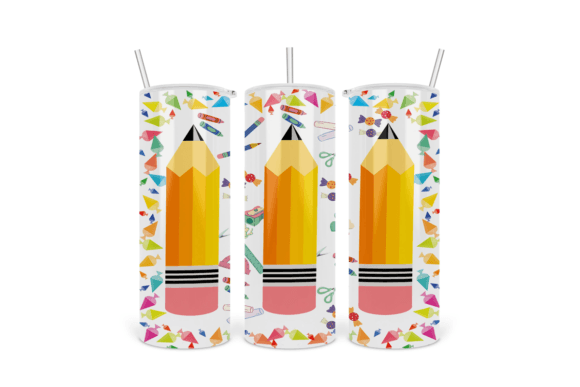
- Digital storefronts: Platforms like Printful or Gelato accept PNG uploads directly. Upload a Welcome Back to School Sublimation Desig, assign it to compatible products (e.g., “Sublimation Tumbler – 20oz”), and enable automatic fulfillment—ideal for educators launching micro-businesses or PTAs fundraising with branded goods.
- Learning management integration: Some districts embed printable resources into LMS dashboards. While not printable directly on student devices, teachers download the PNG, insert it into Google Slides or PowerPoint, and export as PDF handouts—adding interactivity or annotation layers before distribution.
Crucially, none of these integrations require proprietary software or subscription services. The simplicity of the format lowers barriers to entry—especially important for schools operating under tight tech budgets or hobbyists exploring sublimation for the first time.
Considerations Before You Download and Print
Even with technically sound files, successful output depends on environmental and procedural awareness:
- Material compatibility: Not all mugs or tumblers accept sublimation equally. Look for items explicitly labeled “sublimation-ready” with a polymer coating. Uncoated ceramic or aluminum will yield faded or patchy transfers.
- Printer calibration: Ink density affects vibrancy. If colors appear muted after transfer, check your printer’s ICC profile and consider adjusting saturation +5%–10% pre-print—especially for bright yellows or sky blues common in school themes.
- Cutting accuracy: When using print-and-cut, ensure your printer’s alignment is calibrated. A misaligned sensor may cut 1–2 mm off-target, compromising edge definition on intricate letterforms or decorative borders.
- Storage and version control: Since these are digital downloads—not physical inventory—organize files with descriptive naming (e.g., “WBTS_Sunburst_Transparent_300dpi.png”) and store backups in cloud-synced folders. This prevents accidental overwrites when updating designs seasonally.
Looking Ahead: Trends Shaping Future Designs
While today’s Welcome Back to School Sublimation Desig offerings emphasize clarity and adaptability, emerging patterns suggest where utility may expand next. Inclusive representation continues gaining emphasis—not just in figure diversity, but in depicting neurodiverse learning spaces, multilingual signage, and sensory-friendly classroom tools. Additionally, modular design frameworks are gaining traction: base layouts with interchangeable icons (backpacks, laptops, globes) allow users to customize meaning without altering core composition.
There’s also growing interest in hybrid applications—combining sublimation with embroidery, vinyl accents, or foil stamping. A transparent PNG serves as the perfect foundation for such layered approaches, since it leaves room for additional tactile or reflective elements without visual competition.
Ultimately, what makes a Welcome Back to School Sublimation Desig valuable isn’t novelty alone—it’s reliability across contexts, resilience across platforms, and responsiveness to real human needs. Whether reinforcing community in a fourth-grade classroom or launching a side-hustle during teacher planning periods, these files function less like decorations and more like infrastructure: quiet, consistent, and ready when you are.